Most dust questions on a site come down to two numbers: PM10 and PM2.5. Both are particulate matter, tiny particles in the air, sorted by size.
What they are
- PM10 is particles smaller than 10 micrometres: road dust, crushing, haul trucks, construction. It irritates the nose, throat and eyes and is what neighbours usually see and complain about.
- PM2.5 is the finer fraction, smaller than 2.5 micrometres: combustion, smoke, exhaust, and the finest part of mineral dust. It travels further and reaches deep into the lungs, so it carries most of the health risk.
The guideline values
The World Health Organization's 2021 Air Quality Guidelines recommend that the 24-hour average stays at or below 15 µg/m³ for PM2.5 and 45 µg/m³ for PM10, and the annual average at or below 5 and 15 µg/m³. National limits, permit conditions and lender standards such as the IFC guidelines may differ, so check the limit that applies to your project before you set alarms.
How often to measure
A single sampling day tells you what the air was like on that day. Dust depends on wind, rain, shifts and haul schedules, so a short campaign can miss the worst hours entirely. Continuous monitoring, one reading every minute, shows the pattern: which hours, which wind direction, which activity.
Where to measure
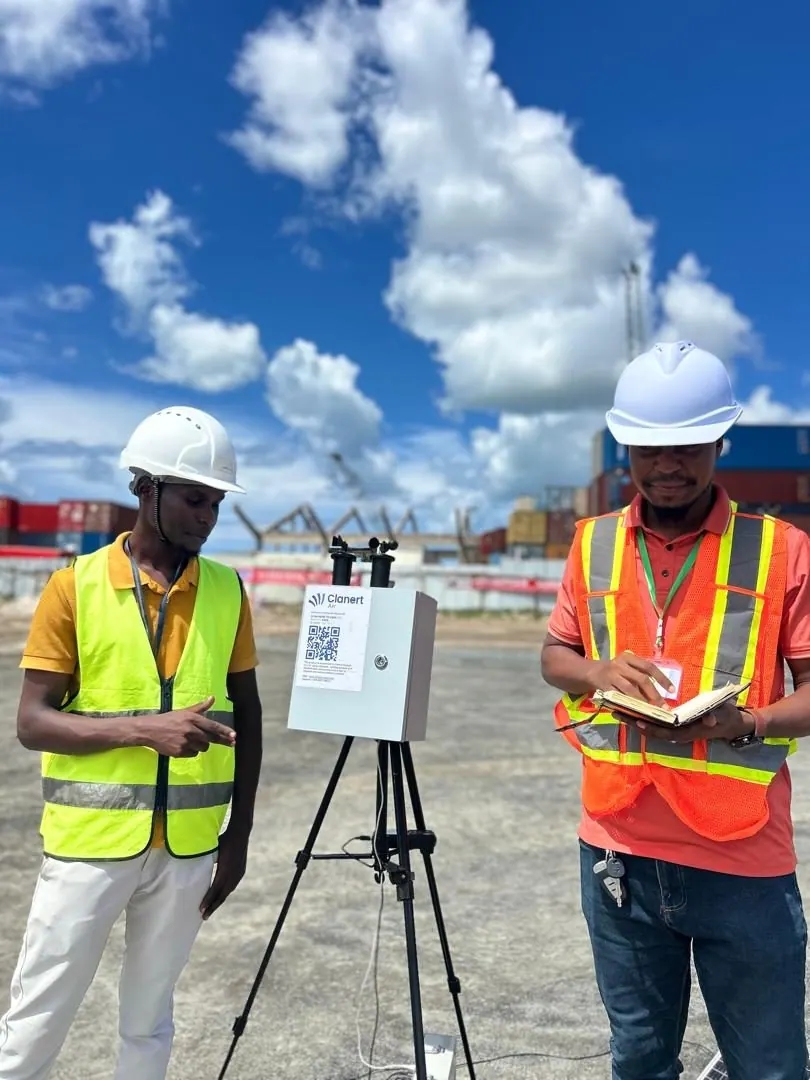
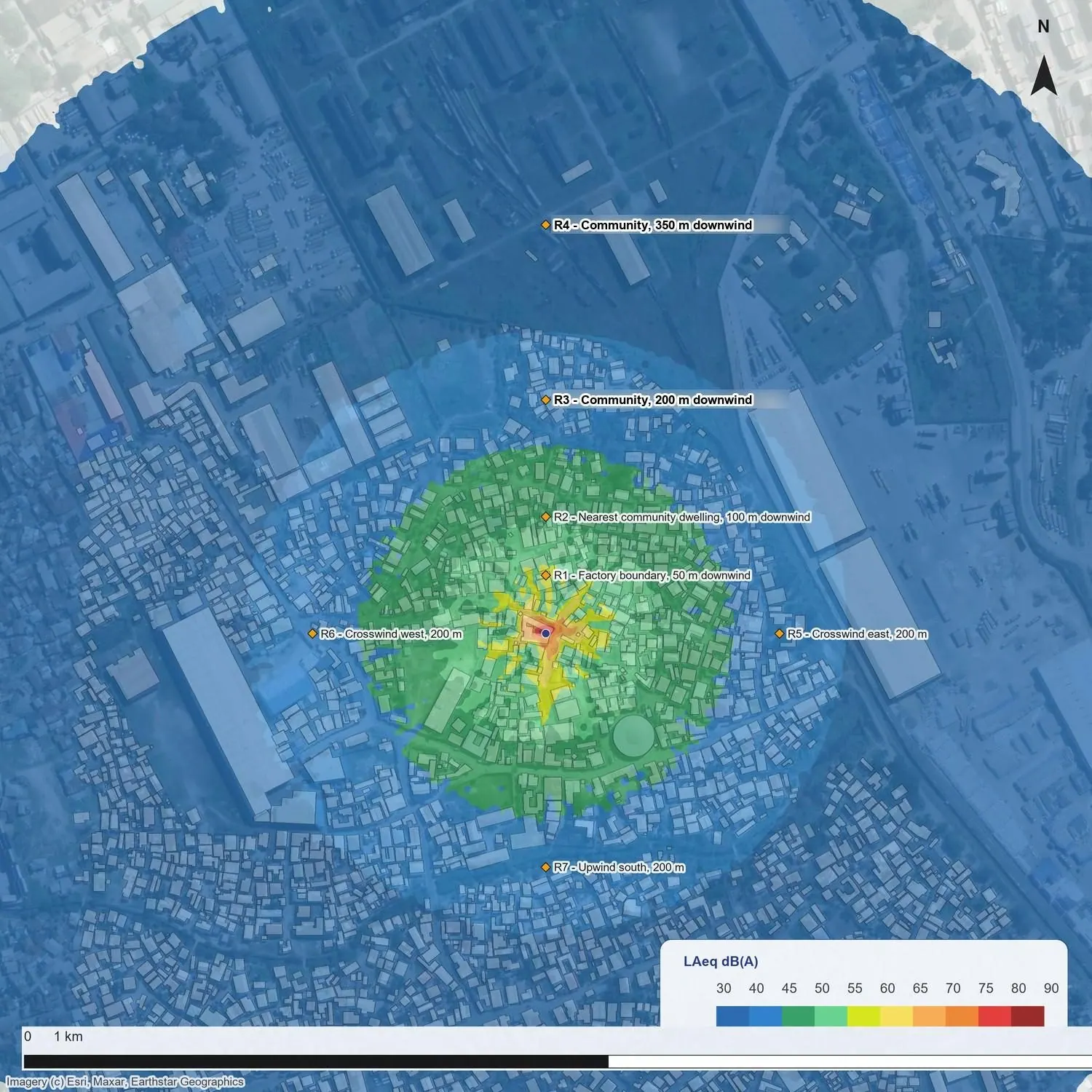
Put the sensor between the source and the people you are protecting: on the boundary facing the nearest homes, downwind of haul roads, beside a playground. Mount it at about breathing height or a little higher, away from walls that block the wind, and away from a single local source like a generator exhaust.
Measure it at your site
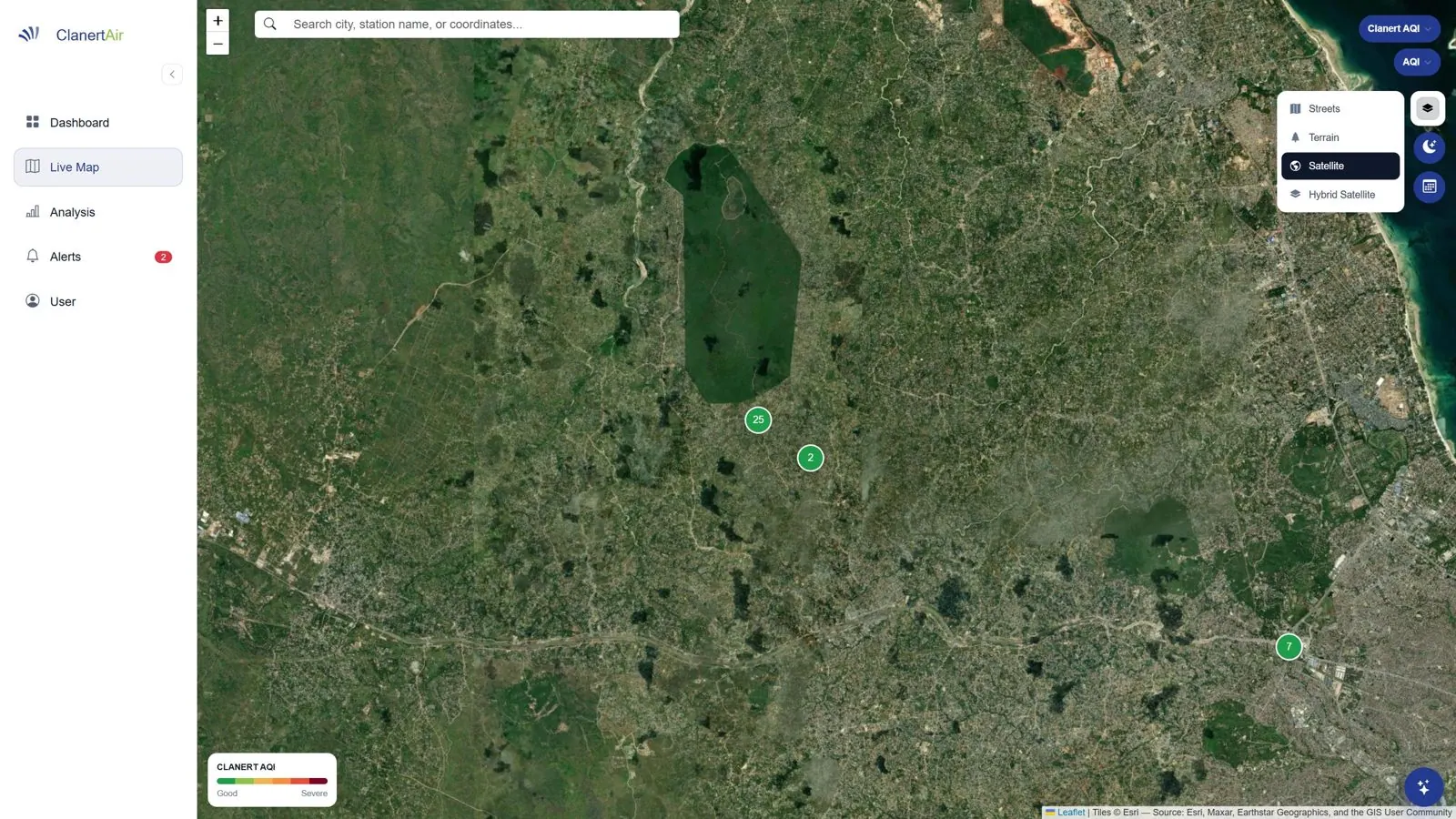
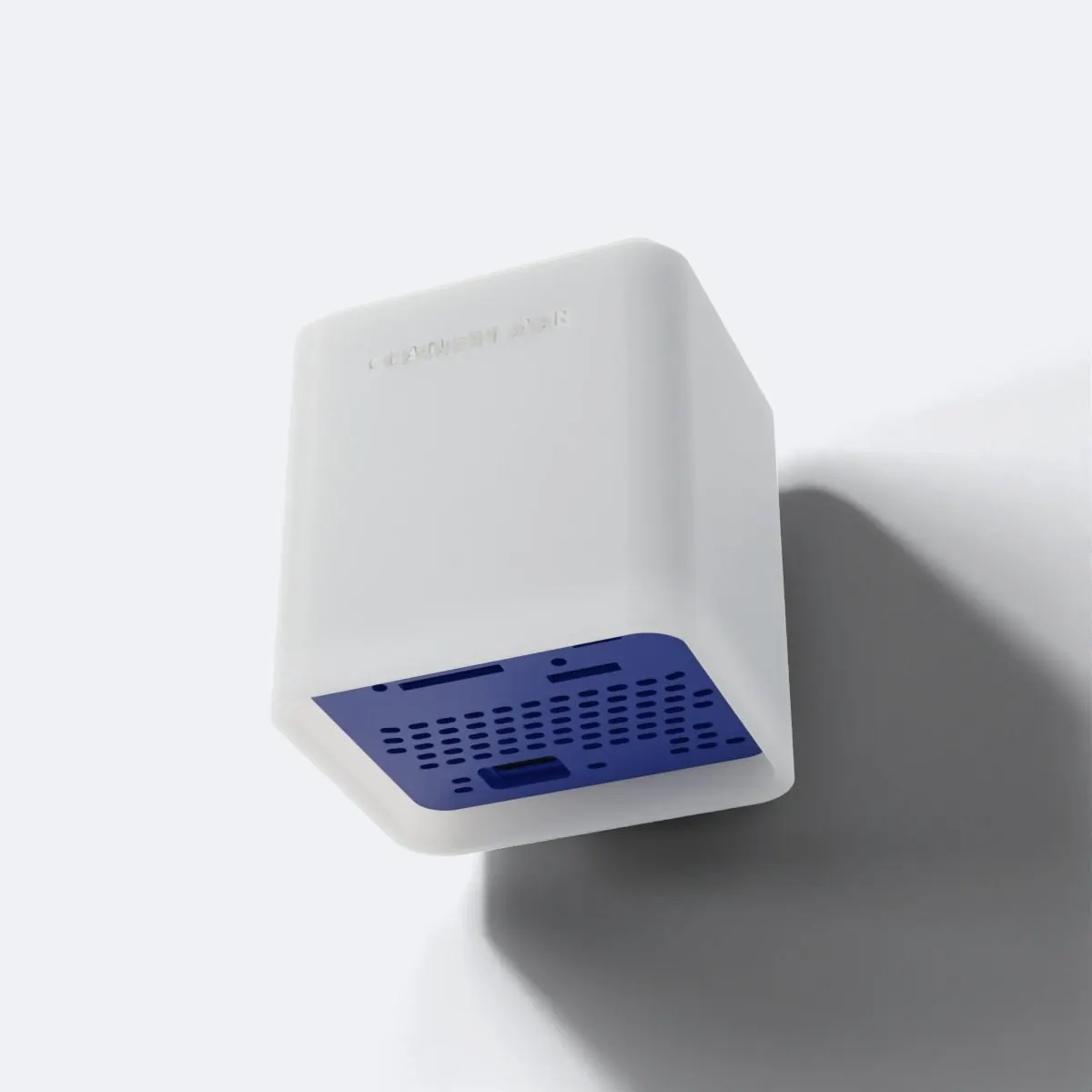
A Clanert Air pod measures PM2.5 and PM10 every minute, alerts your team when a limit is near, and builds the monitoring report for you. You can also look at modelled air quality for any place on Clanert Maps, free.